Now go study...
In case you haven't heard, Tablet Magazine has launched an offense against the world of online trollery. Tablet will now require readers to pay for the privilege of commenting. The fee is modest, $2 gets you all the comments you want for a day. The idea is to put a speed bump, not a wall, in the way of overexcited commenters.
For the record, I think it's a great idea. We'll see how it shapes the comments on a high traffic site like Tablet. I think it will be for the better. But...
Small time outfits like this blog have a very different problem. No comments! No one's paying me to blog. Indeed, I put an enormous amount of effort into what I write (which is why my output tends to be infrequent) with little to no reward, other than the satisfaction of the writing itself. Which is nice, but it would be a lot nicer if there was more feedback from my readers.
So, I'm thinking of starting a new commenting policy of my own. From now on, you will have to pay if you read something you like and don't leave a comment. I'm using a super secret technology that may or may not have come from a scavenged UFO at Roswell. Like velcro and night vision goggles, but bloggy.
What do you think?

Rootless Cosmopolitan
Wednesday, February 11, 2015


Sunday, February 8, 2015
Yiddish Revival in a Bus Station? Oy Gevalt!
Oy Gevalt is right.
Rootless Cosmopolitan special Israeli correspondent Shayna sent this to me. It's a Times of Israel piece about Mendy Cahan's Tel Aviv bus station Yiddish center. (By the way, the article calls it a museum. Is that what we're calling it now? That seems new. And significant. But anyway.)
Yung Yiddish has been the subject of numerous, basically interchangeable, articles in the last few years. Tablet, Haaretz (2008), Haaretz (2012), Eretz, Israel Story (Public Radio). If you don't feel like reading those, you can read my breakdown of the standard Yiddish in Tel Aviv Bus Station narrative here.
I like this story. You get two excitingly hacky tropes for the price of one.Yiddish!Revival! as well as Yiddish!In!A!Bus!Station! What's always funny about these revival stories is that the headlines says revival, but the language of the piece is always so dour, so ahistorical, so indicative of anything but a bright future for Yiddish.
For the record, Yiddish didn't just happen to end up occupying the literal margins of the Israeli body politic.The position of Yiddish within Israeli culture and life is highly politicized-- it is a product of history and politics and conscious language planning. You can't really engage with Yiddish in Israel without understanding the context of what you're doing. Or... you could, and then you would get every asinine article ever written about Yiddish in Israel. So, yeah. There you go.
Rootless Cosmopolitan special Israeli correspondent Shayna sent this to me. It's a Times of Israel piece about Mendy Cahan's Tel Aviv bus station Yiddish center. (By the way, the article calls it a museum. Is that what we're calling it now? That seems new. And significant. But anyway.)
Yung Yiddish has been the subject of numerous, basically interchangeable, articles in the last few years. Tablet, Haaretz (2008), Haaretz (2012), Eretz, Israel Story (Public Radio). If you don't feel like reading those, you can read my breakdown of the standard Yiddish in Tel Aviv Bus Station narrative here.
I like this story. You get two excitingly hacky tropes for the price of one.Yiddish!Revival! as well as Yiddish!In!A!Bus!Station! What's always funny about these revival stories is that the headlines says revival, but the language of the piece is always so dour, so ahistorical, so indicative of anything but a bright future for Yiddish.
My mother always says that Yiddish is the music of the soul and language of the soul,” said [musician Gal] Klein. “It’s burned into our tradition. It doesn’t matter who we are and how far away we get away from it, it’s always a part of us.”
But it’s a fading part. In the Diaspora, Yiddish was the glue that held communities together, a shared language and culture. In Israel, there’s no need for that shared identity."In Israel, there’s no need for that shared identity. 'We’re at a point we have a country and a culture here, so the culture from long ago is a lot less important...'" I mean, I literally LOL-ed. LLOL. I find the total ignorance, and erasure of recent history, to be funny.
“We’re at a point we have a country and a culture here, so the culture from long ago is a lot less important,” said Klein, who tours around the world with his band Ramzailech, a fusion of ecstatic rock and klezmer. On Tuesday, he played with his other band, the Di Gasn Trio, which means “The Streets” in Yiddish.
For the record, Yiddish didn't just happen to end up occupying the literal margins of the Israeli body politic.The position of Yiddish within Israeli culture and life is highly politicized-- it is a product of history and politics and conscious language planning. You can't really engage with Yiddish in Israel without understanding the context of what you're doing. Or... you could, and then you would get every asinine article ever written about Yiddish in Israel. So, yeah. There you go.
Wednesday, January 21, 2015
Toyznt Tamen A New Yiddish Song Event January 28th
I am excited to let everyone know that my dear friend, Miryem-Khaye Seigel, will be celebrating the release of her first CD, Toyznt Tamen. Miriam-Khaye is a brilliant interpreter of Yiddish song, acclaimed gamine of the Yiddish stage, Jewish librarian par excellence and now, composer of new Yiddish song. Guys, this lady is the real deal. I hope I'll see you on January 28th at the Museum at Eldridge Street. And if not then, please pick up her CD online.
Here's a taste of the new album, an original song about the wonder and excitement of life in the Groyser Epl:

Thursday, January 1, 2015
Reaching Out to the Future From the Past
As it's the new year, I'm taking the opportunity to redo, reorganize and, where necessary, reacquaint myself with my library. I pulled down this slim volume of Morris Rosenfeld's poetry and prose for reshelving. I couldn't help but spend some time reading the intro material and flipping through the wonderful translations therein.
(Here's Morris Rosenfeld)
This quote from Itche Goldberg spoke to me:
It's always Movember in Yiddishland

Jewish creativity in English, or in any other language, in order to achieve its maximum color and richness, needs to extend and integrate this heritage. Yiddish literature is not limited to a given number of Yiddish-speaking generations, nor is it on the verge of extinction with their passing. Yiddish creativity is an integral part of the cultural pattern of our people's continuity. It transcends generations and reaches out into the future.
-From the Introduction to Morris Rosenfeld: Selections From His Poetry and Prose YKUF (1964)
The volume also features many wonderful illustrations, like this one, by E.M. Lilien, which appears with the short story 'Haman's Warning, A Purim Fantasy.'

I gravitated toward this particular volume because a few weeks ago I finished rereading the wonderful All of a Kind Family series (reissued by the also wonderful Lizzie Skurnick Books imprint.) In All of a Kind Family Uptown, we see Ella singing Morris Rosenfeld's O ir kleyne likhtelekh (in English translation, alas.)
What's interesting is that the story is set in 1917. Rosenfeld died in 1924. Which means that for the girls of AoaKF, Rosenfeld wasn't some long ago bard of a disappeared world, he was a guy who published poems and songs in the Yiddish papers and those poems and songs were being learned and transmitted in real time. Hard to imagine, almost a hundred years later. As an adult who cares about these things, I wish that Sydney Taylor had at least included his name or some yiddish so young readers would have a clue what Ella was singing.
Morris Rosenfeld: Selections From His Poetry and Prose includes a short story called Hanukah; Jewish Self-Defense. The story is introduced with the first verse of O ir kleyne likhtelekh (in English) but is quite different from the mythic tone of the song. Rather, the story positions, quite explicitly, the "[M]odern Jewish Heroes in Russia" as the heirs to the Maccabee tradition. Don't forget, this volume was brought out in the 1960s by YKUF, the Communist associated Yiddisher Kultur Farband.
"For thousands of years Jews waited for miracles and mocked the spirit of the Maccabees. For generations they exchanged the sword for groveling 'shtadlones' (intercession with the authorities.) They celebrated the 'Miracle of Hanukah' and continuously kept in mind the fact that 'all the holidays will be abolished, except Purim.' The miracle will never disappear.... Not the Torah will save the fist, but the fist will save the Torah. The sword and not the yarmulke will protect the Jew in the bloody lands of his enemies."
I wonder what Mama and Papa of All of a Kind Family would make of that?
Anyway... Did you use this holiday to do any book related organization?
Wednesday, December 31, 2014
Last Minute Signal Boost for the Congress for Jewish Culture: Upcoming Events
Rumors of the demise of the Congress for Jewish Culture have been greatly exaggerated. The Congress has announced a full slate of events ready for the new year. It's a wonderful mix of history, new cinema and new Yiddish music, a little something for everyone. And, as you can imagine for an organization whose precarious existence has made the Times more than once, now might be an excellent time to make a donation.
Straight from the Congress:
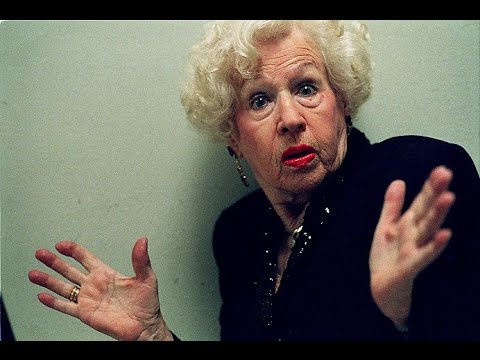 On Sunday 11 January 2015 at 2 PM, we're joining with the American Jewish Historical Society to honor the memory of Mina Bern on the 5th anniversary of her yortsayt. It's going to be a program to remember, with about everyone working in Yiddish theater today (after all, who didn't learn from Mina?) and it's free and open to the public. But you have to have a reservation, so click here to save your seat.
 On Wednesday 28 January 2015 at 3:15 PM and again at 8:45 PM, we're pleased to present our very own project in the New York Jewish Film Festival: a neon animation by Jack Feldstein called How to Break Into Yiddish Vaudeville (in three easy steps!). With illustrations by Ellen Stedfeld and a script by Shane Baker and Allen Lewis Rickman, it's a fun little film, so catch it if you can -- on a double bill with Natan, a feature about an interesting character in the early days of film. Info and tickets here.
 Also on Wednesday 28 January 2015 at 7 PM, our very own Miryem-Khaye Seigel will be celebrating the release of her new CD Toyznt tamen with a special concert at the Museum at Eldridge Street. Busy day, that 28th of January, but you won't want to miss this event. There are a lot of special guests on the program and you can read more about it here.
Straight from the Congress:
Sunday, November 16, 2014
3rd Annual Sholem Aleichem Yiddish Klezfest

Sholem Aleichem Cultural Center presents:
3rd Annual Sholem Aleichem Yiddish Klezfest
Sunday, December 21, 2014, 1-5pm
Featuring:
Aaron Alexander & Zoe Christiansen
KlezKamp Founder, Henry Sapoznik
Hy Wolfe
The Brothers Nazaroff (Daniel Kahn, Psoy Korolenko
& Jake Shulman-Ment)
With:
KlezKamp Founder, Henry Sapoznik
Hy Wolfe
The Brothers Nazaroff (Daniel Kahn, Psoy Korolenko
& Jake Shulman-Ment)
With:
Michael Winograd, Patrick Farrell and Mark Rubin
Dance Leader: Steve Weintraub
Final Act: Open Jam for All Musicians!
Sholem Aleichem Cultural Center
3301 Bainbridge Ave, Bronx, NY 10467
D train to 205th / 4 train to Mosholu Pkwy
One block from Montefiore Hospital
Info: 917-930-0295
$10 admission includes nosheray
With support from the Center for Traditional Music and Dance
and the National Endowment for the Arts
(Tsvishn undz: Based on attendance in past years, the room will fill up FAST! If you want a seat, make sure you get there early.)
Final Act: Open Jam for All Musicians!
Sholem Aleichem Cultural Center
3301 Bainbridge Ave, Bronx, NY 10467
D train to 205th / 4 train to Mosholu Pkwy
One block from Montefiore Hospital
Info: 917-930-0295
$10 admission includes nosheray
With support from the Center for Traditional Music and Dance
and the National Endowment for the Arts
(Tsvishn undz: Based on attendance in past years, the room will fill up FAST! If you want a seat, make sure you get there early.)

Saturday, November 1, 2014
Litvakus and The Party Music of Jewish Belarus
My friend Dmitri Zisl Slepovitch just released the new Litvakus CD and - SPOILER ALERT - it's brilliant. Read my review here. And listen to this while you do. (You'll want to buy the whole CD. Get it here.)
If you weren't lucky enough to catch Litvakus at the Center for Jewish History last week, here's a clip. This is a Belarusian song about a Jewish girl named Khayke.
If you weren't lucky enough to catch Litvakus at the Center for Jewish History last week, here's a clip. This is a Belarusian song about a Jewish girl named Khayke.
Sunday, October 19, 2014
Happy Unholiday
Unless you've been living under an unkosher rock, you probably know that we just said goodbye and git vokh to the marathon of holidays that started with Rosh Hashanah and ended with Simkhes Toyre (and then blended into Shabes, just for a little extra fun.) For a lot of people, it's finally back to the five day a week grind.
The afternoon before Yom Kipper started I saw a colleague at work and we exchanged holiday wishes. He said 'tsom kal' to which the jerky pedant inside of me insisted on responding that "tsom kal [a light fast] is just a calque from the Yiddish of 'hot a laykhtn fast'."
He happens to live with another Yiddish pedant, so he just smiled and waved. But it was true. And not just 'tsom kal.' Not content to scold in person, I took the matter to Twitter. 'Most of modern Jewish culture is just a secret calque from Yiddish. ADMIT IT.' And while I got a little pushback on that, I also got a great reference from a Twitter friend, perfectly on point.
After yontev my brilliant Twitter friend Shlomo Kay sent me this. It's a blog post called Origins of the Phrase Hag Sameah and it's a wonderful translation and summary of a Hebrew language post on the blog of the Academy of the Hebrew Language. The thrust of the post is that the phrase hag sameah (or khag sameakh) is fairly modern, only coming into wide use at the turn of the 20th century. And it is most definitely a calque (a word for word carry over) from the Yiddish gut yontev or a freylikhn yontev.
I often talk about the way that Yiddish language and culture is erased and delegitimized-- and delegitimized by its erasure-- and this is a pretty great example.
And here's some more secret Yiddish calques off the top of my head:
Please add more in the comments!
The afternoon before Yom Kipper started I saw a colleague at work and we exchanged holiday wishes. He said 'tsom kal' to which the jerky pedant inside of me insisted on responding that "tsom kal [a light fast] is just a calque from the Yiddish of 'hot a laykhtn fast'."
He happens to live with another Yiddish pedant, so he just smiled and waved. But it was true. And not just 'tsom kal.' Not content to scold in person, I took the matter to Twitter. 'Most of modern Jewish culture is just a secret calque from Yiddish. ADMIT IT.' And while I got a little pushback on that, I also got a great reference from a Twitter friend, perfectly on point.
After yontev my brilliant Twitter friend Shlomo Kay sent me this. It's a blog post called Origins of the Phrase Hag Sameah and it's a wonderful translation and summary of a Hebrew language post on the blog of the Academy of the Hebrew Language. The thrust of the post is that the phrase hag sameah (or khag sameakh) is fairly modern, only coming into wide use at the turn of the 20th century. And it is most definitely a calque (a word for word carry over) from the Yiddish gut yontev or a freylikhn yontev.
I often talk about the way that Yiddish language and culture is erased and delegitimized-- and delegitimized by its erasure-- and this is a pretty great example.
And here's some more secret Yiddish calques off the top of my head:
gut yontev ----> khag sameakh
hot a laykhtn fast------> tsom kal
gut shabes-----> shabbat shalom
in a guter sho-----> b'sha'a tovah
Please add more in the comments!
Thursday, October 9, 2014
This Time Last Year...
Last Sukkes I was in another state, cleaning out the remnants of my mother's life and thinking about what a sukke and a cement storage unit share in common:
Read more here.
I was taken by the contrast between the concrete cells of the storage units and the brittle fragility of the sukke. You can't really settle into either of them. Both are peculiar abstractions of domesticity. Stage instructions. Teddy bears and photos and good china- these are props. Home is something more- a lived experience animated for a time by the people inside.
(The author with actual bear lost in the memory purge of Sukkes 2013)

Read more here.
Sunday, September 28, 2014
Notes from the Past
Just found a notebook full of these weirdo notes from 1999-2000-ish. Don't act like you don't have your own weirdo notes from the past with pages of unsearched queries...

With apologies to all my Karliner readers...
Subscribe to:
Posts (Atom)